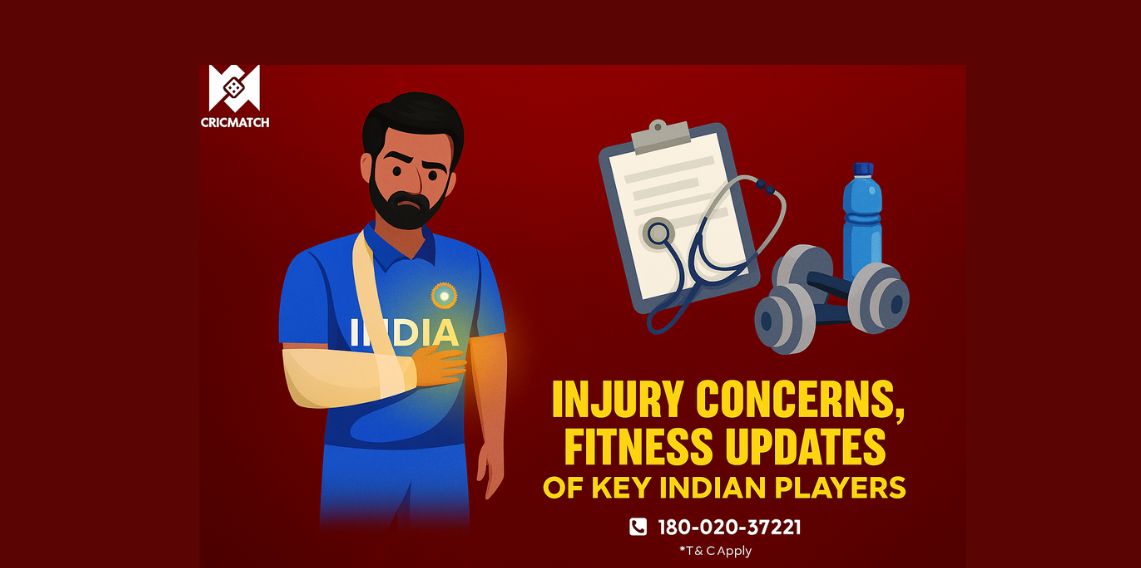
In elite cricket, availability is a strategy. India’s depth is a strength, but it still relies on smart workload management, timely rehabilitation, and transparent return-to-play protocols. Below is a role-wise snapshot of recurring fitness themes, common timelines, and what typically signals a green light for selection across formats.
Fast Bowlers: Managing the Engine Room
Primary risks: lumbar stress reactions, side strains, hamstring issues, ankle/foot overload.
What to watch:
- Bowling load ramps: After any layoff, the team usually follows a 3–4 week ramp (volume and intensity), measured in balls per week and “spells under fatigue.”
- Match simulations: Two key boxes to tick—(1) repeatable pace in the third spell and (2) control in death/late overs.
- Fielding readiness: Sliding/turn tests and back-to-back boundary throws without discomfort.
Depth outlook: India’s rotation has improved—frontline quicks alternate across formats while a second group (support quicks + A-tour standouts) fills gaps. This minimizes spikes in workload that typically precede soft-tissue setbacks.
Spin Unit: Lower Impact, High Repetition
Primary risks: finger/elbow overload, shoulder impingement (throwing), knee niggles from long spells.
What to watch:
- Spell duration under heat: Spinners often log the highest time-on-feet in Tests; hydration and recovery windows are crucial.
- Throwing volume: Monitored across series; long boundary throws are capped on high-load days.
- Knee management: Taping and quad strength maintenance reduce late-match discomfort, especially on abrasive outfields.
Spinners generally return faster than quicks post-niggle, but throwing discomfort can delay white-ball fielding roles even when bowling is pain-free.
Top-Order Batters: Groins, Hips, and Backs
Primary risks: adductor strains (lunge & reach), lower-back tightness from travel and long stints, hand/finger knocks.
What to watch:
- Lateral movement drills: Successful return requires pain-free lunges, quick first step, and repeated turn-and-go sprint tests.
- Volume tolerance: Two long net days plus a match-simulation day without reaction is a typical sign-off.
- Grip strength: Post-impact finger/hand issues are cleared via dynamometer targets and catching progressions.
Consistency in the slips or short mid-wicket is often the last checkbox before selection in Tests.
Middle-Order & Finishers: Hamstrings and Core
Primary risks: hamstring strains during sprint singles and diving slides; core tightness from frequent range-hitting.
What to watch:
- Explosive running tests: 10–20m repeat sprints plus second-run intensity under fatigue.
- Hitting progression: Range-hitting ladders (lofted hits after 30+ balls) without loss of sequencing.
- Fielding dives: Controlled dives and immediate pop-up—vital for boundary riders and inner-ring stoppers.
Return-to-impact drills (high-intensity overs near innings end) are the fitness staff’s litmus test for white-ball availability.
Wicketkeepers: Knees, Lower Back, and Forearms
Primary risks: patellar/quad tendon stress from extended squatting, lumbar tightness, forearm flexor fatigue.
What to watch:
- Squat tolerance: 60+ overs across a day without knee flare-ups.
- Take-and-throw chain: Clean take, quick gather, and accurate release repeated 20–30 times.
- Dive-and-rebound: Lateral takes and immediate recoveries are essential for T20 intensity.
A keeper’s return usually trails bat-only clearance by 1–2 weeks due to unique positional demand.
All-Rounders: Dual-Role Complexity
Primary risks: workload stacking—batting power plus bowling volume compresses recovery windows.
What to watch:
- Staggered clearance: Batting first, then fielding, then partial spells, before full quota.
- 48-hour response: How the body reacts two days after a match-simulation is often more telling than the session itself.
- GPS & jump metrics: Lower-body freshness tracked by countermovement jump (CMJ) trends; dips warn of looming soft-tissue risk.
In multi-format blocks, expect rolling rest days or targeted series rotation to keep all-rounders effective.
Rehab & Return-to-Play (RTP) Checklist (Typical)
- Pain-free daily living → mobility fully restored.
- Gym baselines → single-leg strength symmetry ≥90–95%; core endurance within norms.
- Skill reload → progressive nets (low → match pace), position-specific fielding.
- Match simulation → role-specific scenarios (e.g., final-over surge, long red-ball spells).
- Back-to-backs → two high days with no adverse next-day markers.
- Medical sign-off + selector brief → role clarity for immediate series.
Practical Series Notes
- Expect managed minutes early in a comeback: reduced spells, flexible batting positions, and strategic use of the sub fielder.
- Travel recovery matters: red-eye flights correlate with stiffness spikes; teams now front-load mobility and hydration on arrival.
- Heat plans in India: ice towels, sodium protocols, and shaded rotation for boundary riders mitigate late-innings fatigue.
With these controls, India’s depth should remain resilient even through congested tours.
Final Thoughts
Fitness management is now a competitive edge. The blend of data-led monitoring, smarter rotation, and clearer RTP thresholds keeps India’s core available more often, and sharper when it matters most.
For structured injury trackers, return-to-play timelines, and role-based availability notes across series, fans can explore detailed dashboards on the Cricmatch platform New users can Cricmatch register to access match-week briefs, fitness indicators, and selection context compiled in an easy, decision-centric format.